
What is content gamification and why does it matter for marketers?
January 27, 2026
Words by Jeff Cardello
When you’re playing a well-designed video game, no one ever really thinks, “I’m playing a video game right now!” Instead, you’re fully present in the moment and focused on doing whatever it takes to defeat enemies or advance to the next level.
Content gamification gets our attention in the same way. Brands entice us with challenges, and the rewards that come from our success. We get something in return, whether it’s unlocking a special product offer or just an amusing and lighthearted distraction.
Digital marketing trends like content gamification are part of a bigger shift, where brands aim to humanize who they are and connect with visitors on a more personal level. Rather than just hammering us with marketing messaging they invite us to participate. We’re not idle observers, but active players in gamified experiences, and given something for our time and effort.
We’re going to take you through what content gamification is, show you gamification examples and talk about why they work, as well as get into the psychology behind engagement strategies.
What is content gamification?
We love gamification examples that take a multi-media approach. Adobe’s My Creative Type combines stylized 3D graphics, rich sound design, and interactive content, showing that gamified experiences can be both meaningful and entertaining.
Gamified experiences take something conventional and turn it into play. Applying familiar game mechanics to things like learning something new, taking a quiz, keeping up a streak, or being part of a customer loyalty program keeps people motivated and interested in coming back.
Content gamification may follow straightforward engagement strategies, giving visitors structured experiences like surveys or quizzes. Or gamified experiences can take less linear approaches like a video game, or a branded digital experience like a photo filter or an AR scavenger hunt.
Have you ever wanted to launch dumplings across a city? MailChimp’s Dumpling Delivery helps you get dumplings to hungry customers, which isn’t only enjoyable to play, but is the perfect metaphor for MailChimp’s purpose in getting out content and marketing materials where they need to go.
Gamified content vs interactive content
Let’s get this out of the way first. Content gamification is interactive content. But not every piece of interactive content is gamified marketing.
The major difference between them is intent. Gamified content assigns value to engagement. Complete a survey? Get a 10% off code. Complete challenges? Earn badges that are pinned to your profile. And finish a course? Earn a certificate you can post on social media showing off your accomplishments. Gamified content is about building engagement over the long term by giving people something special back.
Interactive content is far less focused on goals or hitting certain marks. Want to learn more about a number in a data visualization? Click on a hotspot. Or maybe you’re having trouble figuring out what product to buy from a company. Take a quiz to narrow down just what you’re after. Interactive content lives in the present moment, activating curiosity and inspiring exploration, while gamification examples require time and effort that’s put towards earning something.
Why content gamification matters for marketers
Improved engagement
We tend to hang around longer when we have something to do. It's the reason why game nights with friends stretch past midnight, "one more episode" becomes an entire season, and we get so lost in subway Sudoku that we almost miss our stops.
Gamified content taps into those same parts of our brains. It holds our attention, creating more opportunities for us to engage, absorb information, and follow through on calls-to-action.
And almost everyone enjoys a bit of friendly competition. Whether we’re trying to top a personal best, or to beat out others on a leader board, gamified content rewards us for winning and invites us to keep trying if we fall short.
The psychology behind gamified content
Reward loops
What are reward loops?
Whether you go to bed happy with the thought that you’ll get a crack at the newest Wordle first thing in the morning, or you’re in line at Starbucks ready to cash in your reward point stars for a free cold brew, both rely on the same principle: putting into action engagement strategies that give people reasons to come back. It’s a pattern of human behavior that’s so common psychologists have come up with the term “reward loop” to describe it.

LinkedIn’s Zip logic game is an engaging puzzle, but they also use it to drive engagement by showing you who else you may know is playing it.
Reward loops are broken down into three phases:
- Anticipation
Our brains give us a jolt of dopamine even before we get something we’re excited about. Remember Pavlov and his dogs? Much like a canine’s mouth watering at the sound of a bell, our minds start gearing up for a reward as soon as we get an indication that it’s coming our way. Anticipation is that feeling when a pre-sale code hits your inbox for a chance to score tickets to see your favorite band, or when an online course progress bar creeps toward 100%. Gamified experiences tap into the drama of suspense, heightening excitement the closer we get to receiving something we’re after. - Challenge
Once we’re primed with the wonderful possibilities of getting something out of our efforts, it’s time to pull a Joseph Campbell and begin our hero’s journey. The challenge phase gives us something to solve, complete, or win. Our motivation is that golden prize, waiting at the end of our adventure. - Reward
The reward phase is the payoff. It can be something as simple as the feeling of accomplishment when sharing our Duolingo learning streaks with our social media friends, or something more tangible like earning special offers.
Gamified experiences are all three stages of a reward loop
Reward loops create flow states, returning us to that first step of anticipation, eager to face the next challenge or give it another try. It’s why we’ll take an extra 15-minute walk to close fitness rings, keep up a learning streak, or revisit a favorite brand’s site to play gamified experiences. As we loop back to the beginning, we know what to expect, the reward we’ll get, and we’re ready to go again.
Intrinsic vs. extrinsic motivation
This is the perfect spot to talk about motivation. Sure, there are things we chase that have concrete benefits, but sometimes we do things simply for the joy of doing them.
Intrinsic motivation
Intrinsic motivation refers to activities like creating, learning, or participating in something for our own happiness rather than from external pressure or expectations. Doodling is the perfect example. Whether we end up with something artistic, or just mindless scribbling it’s the act of doing that matters.
Extrinsic motivation
Extrinsic motivation is knowing the reasons why we should participate and what we’ll get for winning. Like the gift cards offered to the top team at the end of a trivia night, or the chance to get a plane ticket for free by cashing our credit card points, we stay interested and engaged because we know what’s at stake.
How to start gamifying your content
No-code tools
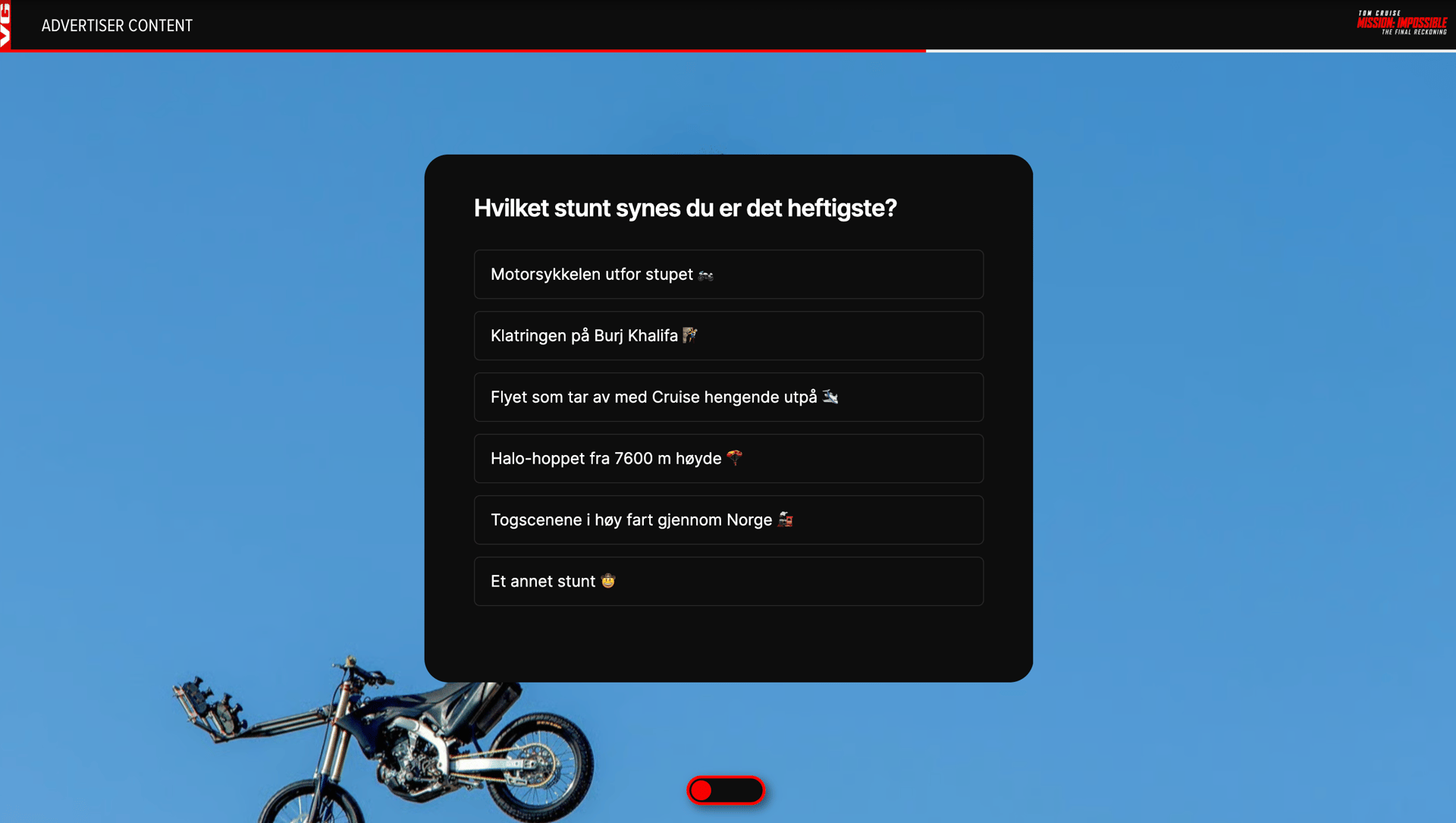
Vev offers a number of ways to integrate quizzes, surveys, and other interactive elements without requiring code.
While content gamification can take many different forms, you don’t have to know JavaScript or HTML to get started. Using a tool like Vev can offer many possibilities as far as putting together infographics with hotspots, integrating 3D graphics, as well as adding quizzes, surveys, or other challenges for your visitors to participate in.
Keep the focus on UX
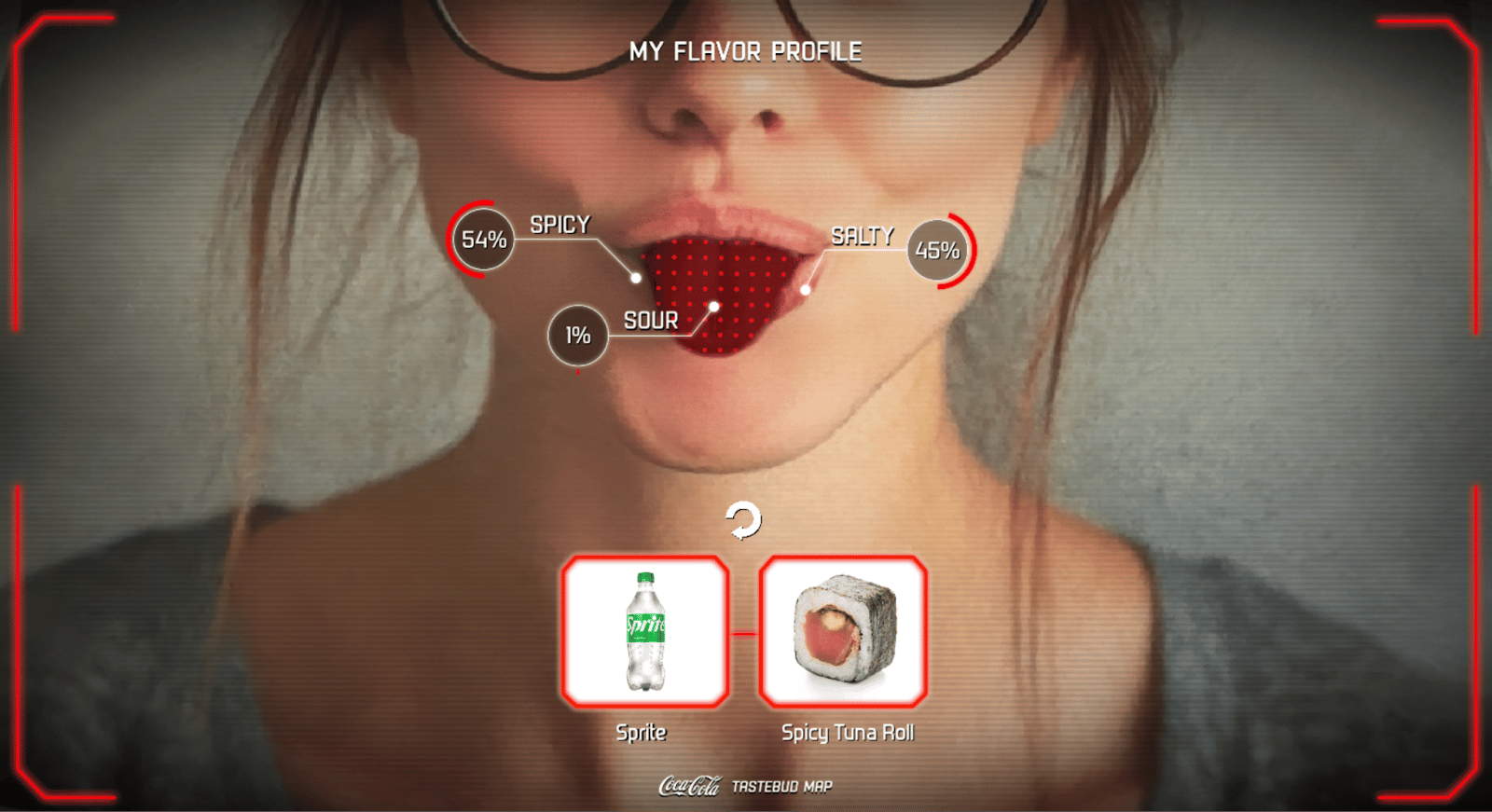
Content gamification should blend into a user experience rather than overcomplicating it.
Coca-Cola’s Tastebud Map is a simple and enjoyable interactive feature that fits in with their brand. All visitors need to do is stick out their tongue, and in return they get food pairings, as well as the option to download the photo to share with your friends. It’s an intrinsically motivated activity that’s more about fun and giving customers a unique experience rather than a heavy-handed marketing message.
Common pitfalls to avoid
Complicated game mechanics
Keep interactions simple and intuitive. If the instructions are too long, or it’s not obvious how to interact with it, you’re doing too much.
Not having a higher purpose
While not every instance of content gamification needs to have well-defined goals, it should still be tied into how you want people to perceive your brand, or build stronger relationships with customers.
Ignoring data and feedback
Are people actually engaging with your gamified marketing content? If metrics like time spent on the page or bounce rates show otherwise, it’s time to rethink your engagement strategies.
Create gamified content experiences at scale
Customers want to feel like they’re more than just data points. By putting people at the center of the action, brands create stronger connections. Interactive experiences feel more personal, turning casual visitors into customers.
Whether you want to offer quizzes, embed 3D games, or craft other types of gamified experiences, Vev empowers you to build immersive and interactive web apps without writing a single line of code.