
How to create high-impact animated web pages (without sacrificing performance)
March 03, 2026
Words by Caitríona Burke
Animation is the default language of modern digital storytelling.
Scroll-triggered transitions and layered reveals. Subtle motion cues and immersive sequences that guide attention instead of demanding it. These are all integral to creating engaging digital content. But, there’s a hurdle most teams run into: performance.
Traditionally, the more motion you add, the more fragile performance becomes. Pages get heavier, layouts get messy, and developers get pulled in to fix what was meant to feel effortless. Because of this, teams either scale back creative ambition or ship something that looks impressive but performs poorly.
We’re here to show you it doesn’t have to be that way. High-impact animation and strong performance can coexist. Let’s take a look at how you can achieve this in Vev, where motion is built inside structure.
The real problem with animated pages
When animated pages slow down, it’s rarely because animation in and of itself is “bad.” It’s because animation is often:
- Bolted on at the end
- Built outside a component system
- Overloaded with unoptimized assets
- Recreated from scratch every time
In other words: traditional animations are just motion without infrastructure. That’s where most performance issues begin.
Start with structure, not effects
To build animated pages that scale, don’t start with transitions. Start with a system. This is where our Libraries change the equation. Instead of designing and animating one-off sections, you define:
- Reusable components
- Brand-consistent layouts
- Predefined spacing and hierarchy
- Approved animation patterns
Motion becomes part of the component logic, not a decorative afterthought. Watch our introduction to Libraries to get started:
The impact?
- Designers don’t reinvent animation rules every time
- Brand consistency stays intact
- Pages stay structurally sound
- Performance becomes predictable
When animation lives inside a Library, you’re not creating isolated experiences. You’re building scalable motion patterns.
What “high-impact” actually means
High-impact doesn’t mean high intensity. It means motion that guides attention, transitions that clarify hierarchy, subtle interactions that reward exploration, and scroll-based storytelling that feels intentional. The goal is always to support the narrative, not compete with it.
With Vev’s pre-built Motion and Interactions, animation is directly connected to layout structure. You can:
- Trigger animations on scroll
- Layer motion across sections
- Animate individual elements within structured components
- Sequence transitions for storytelling flow
And because everything is built within a visual system, motion stays aligned with design intent.
Motion: Built for performance and visual impact
Motion is a set of 12 animated animated elements you can drag onto the canvas, resize like any other element, and customize in the Properties panel (e.g. colors, speed, intensity, and interaction).
Motion is designed to be:
- Lightweight: Using WebGL and optimized rendering for smooth performance
- Responsive: Works fluently across devices
- Composable: Dropped into a page like any other element
- Customizable: Controls for speed, timing, and trigger behavior
Unlike traditional approaches where animation is bolted on at the end, coded from scratch, or shipped as heavy video/GIF assets, Vev's Motion element lives inside the visual production flow. It doesn’t require developers, plugins, or separate libraries, and it shouldn’t slow your page down.
Interactions: Movement for meaningful engagement
Animation at scale isn’t just about big scroll sequences! It’s also about the small, meaningful responses users get when they engage with a page. That’s where Interactions come in.
Interactions in Vev are highly customizable UI behaviors you can attach to nearly any element in Vev. With Interactions, you can create things like:
- Hover effects: Animations that respond when a cursor moves over an element
- Click/Press feedback: Visual responses when a user taps or clicks
- In-view triggers: Animations that begin when elements enter the viewport
- Scroll-linked transforms: Micro-movement tied to scroll position
- State-based responses: Changes tied to element states (hover, active, focus)
The key strengths of Interactions:
- Declarative control: Set triggers and responses in the UI, no code needed
- Contextual nuance: Subtle cues that guide users instead of overwhelming them
- Performance-aware design: Built into the Vev runtime, prioritizing smooth behavior
- Reusability: Once defined, interactions can be part of your reusable component library
Performance isn’t about using less animation
It’s about using smarter animation. Here’s what separates fast, immersive pages from heavy ones:
1. Component-based animation
When animation is defined at the component level (via Libraries), it becomes reusable and optimized. Instead of duplicating effects across pages, teams reuse structured and tested sections, ensuring consistency and performance.
2. Predictable layout behavior
Performance issues often stem from layout shifts and unpredictable stacking. When animation is applied within predefined layout rules, structure protects performance:
- Spacing remains consistent
- Responsive behavior stays intact
- Animations don’t break across devices
3. Intentional layering
High-impact pages often use layered storytelling: text, imagery, video, and graphics. But, layering without hierarchy becomes expensive.
Using Libraries, teams define:
- Which elements can animate
- How they animate
- In what sequence
- With what constraints
That predictability keeps complexity under control.
Read our guide to Understanding Libraries for more information on setting Libraries up, or contact our professional services team for help setting up and building Libraries for you in Vev.
The power of Motion + Libraries together
Motion on its own creates moving moments. Libraries create systems. Together, they create scalable storytelling.
Here’s what that looks like in practice:
- A campaign team builds an immersive launch page using pre-approved animated sections.
- A brand studio creates interactive longreads that reuse motion patterns across clients.
- A global marketing team localizes high-impact pages without rebuilding animation logic each time.
- An enterprise content team maintains performance while shipping visually rich experiences at scale.
Examples of high-impact animated web pages made in Vev
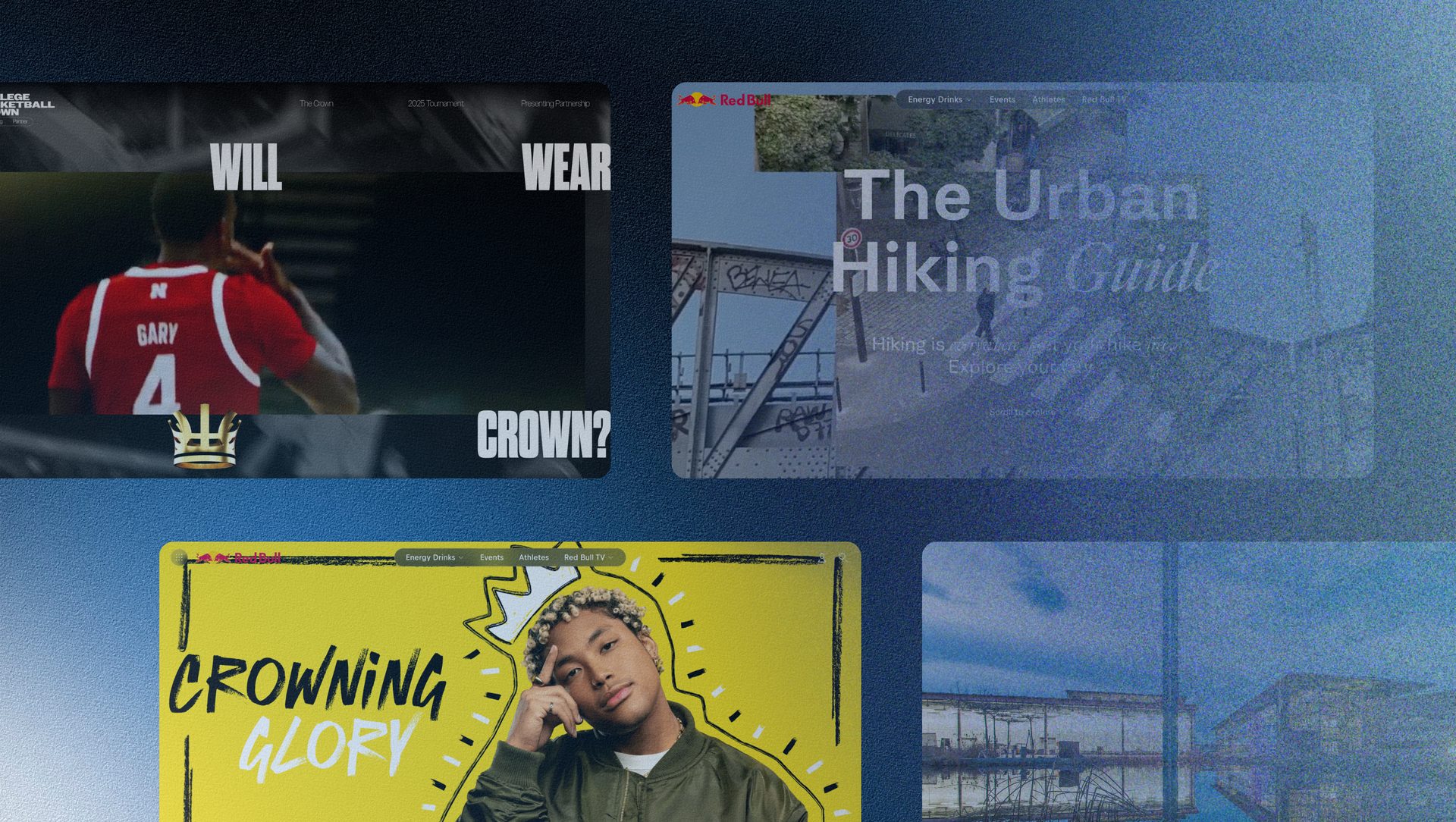
HLabs for Red Bull
HLabs use Vev to create animated editorials for Red Bull's The Red Bulletin, staying on brand for their client whilst reaching new creative heights.
Russmedia
Russmedia revitalized reader engagement but also delivered substantial value to advertisers, demonstrating the power of innovative digital storytelling with Vev.
AEG Global Partnerships
The College Basketball Crown page by AEG Global Partnerships uses subtle and well-placed animation to showcase their partnership opportunities.
Best practices when building animated web pages at speed and scale
If you’re in a big team or org, the likelihood is you’re shipping a high volume of pages, all with their own purpose and format, from campaign landing pages and microsites to reports and editorial features. If motion isn’t governed when working at this scale, every new page increases complexity.
But when web page animation lives inside structured Libraries:
- Governance and creativity coexist
- Performance becomes repeatable
- Teams move faster without cutting corners
You’re building both impact and stability into the same system.
If your goal is to create animated pages that feel premium but still load fast and behave predictably, follow this model:
1. Define motion rules in your Library
Don’t animate ad hoc. Build motion-ready components once, and reuse time and time again.
2. Prioritize narrative flow
Use animations, Interactions, and Motion to guide, not distract.
3. Keep humans in the loop
Automation accelerates production, but editorial judgment keeps experiences sharp. The heart of the content still needs a human touch.
4. Test at the system level
When animation is standardized inside Libraries, you optimize once and benefit everywhere.
High-impact does not mean high risk
The result of designing animated web pages inside a governed structure? Visual ambition is unlocked, brand consistency stays on track, reliable performance is a given, and scalable production becomes workable for every team.
If you're ready to see how this could work for your team, or would like to explore how our internal team of experts can set you up in Vev for success, book a call with our team below.