
How enterprise teams standardize brand assets without slowing down content production
January 20, 2026
Words by Tine Karlsen
Whilst many think the fault lies in creative design, failures in brand consistency are often an operational problem.
If you’ve worked inside a large organization, you already know this: Brand inconsistency doesn’t come from bad intentions or weak guidelines.
It comes from how content is actually produced at scale.
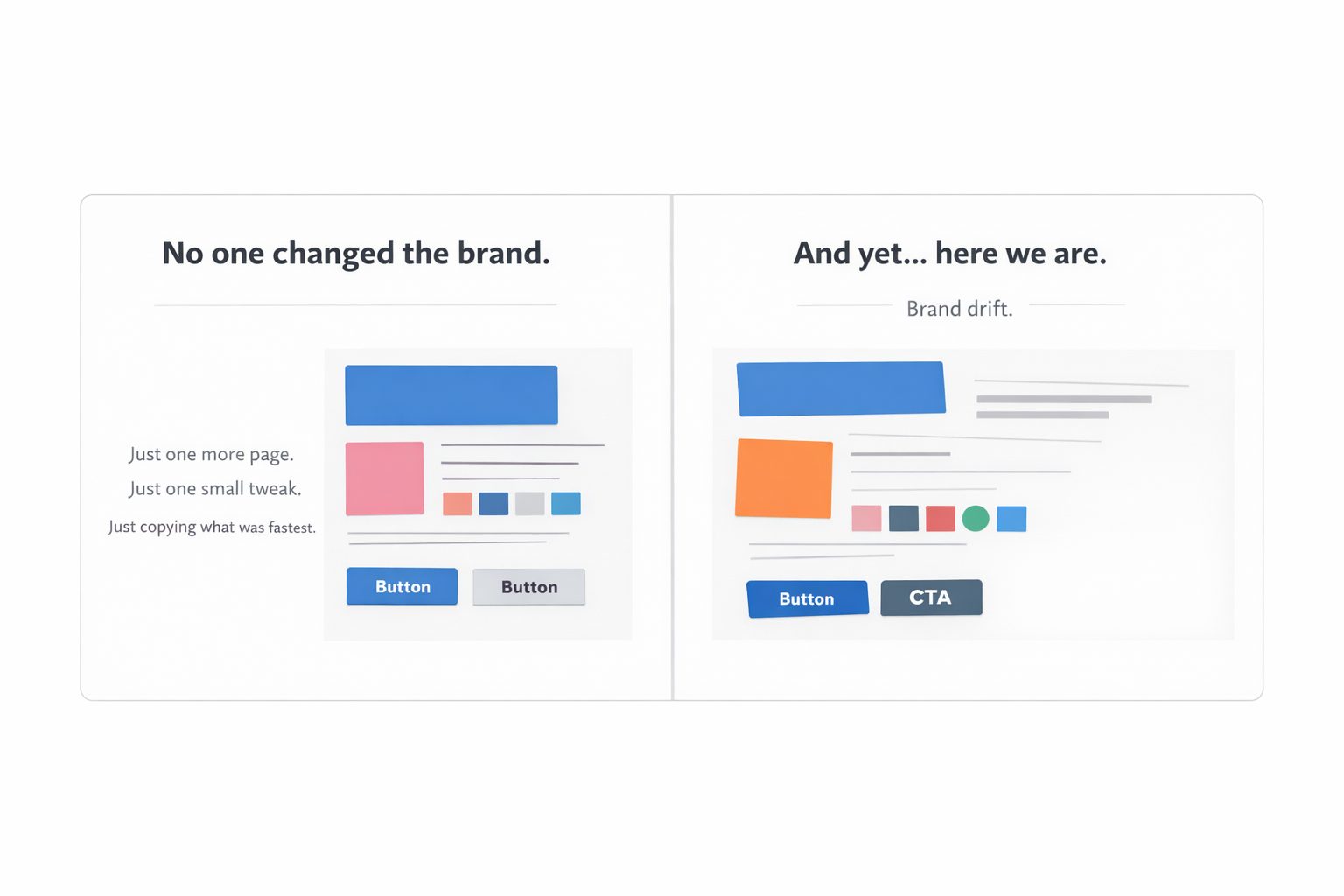
Different teams, deadlines and tools pile up, everyone is trying to move fast, and “just one more page” slowly becomes dozens.
This is the reality most enterprise web and content leaders face:
- Campaign teams need speed
- Brand teams need control
- Designers are asked to solve both
So, it's time to shift from believing the problem to be solved is how to design better; the real challenge is how to scale content without losing trust in the brand.
Why brand drift accelerates as organizations grow
In smaller teams, consistency happens through proximity.
People talk. They review each other’s work. Decisions are visible.
At enterprise scale, that breaks down.
Common symptoms we see repeatedly:
- Teams copy layouts from old projects “just to get going”
- Approved designs live in slide decks, not production tools
- Templates exist, but quickly fall out of date
- Designers rebuild the same sections over and over
Over time, this creates brand drift because the system makes consistency hard. This is where most enterprises hit a wall:
Governance slows velocity.
Velocity undermines governance.
The hidden cost of “just using templates”
Templates are usually the first attempt at fixing this. And to be fair, they help... briefly.
The issue is that templates tend to be:
- Static snapshots, not living assets
- Difficult to update once widely distributed
- Detached from real production workflows
What starts as a helpful shortcut often becomes another thing teams work around. In practice, templates answer what a page looked like once, and not how teams should build pages today.
A more realistic model: shared, reusable brand assets
Leading enterprise teams are shifting away from rigid templates toward shared libraries of approved layouts.
The idea is simple:
- Designers create high-quality sections and pages once
- Those assets live in a central, shared system
- Content teams reuse them directly without redesigning
This changes the conversation entirely, with 2 major wins:
- Instead of policing outcomes, brand teams shape inputs.
- Instead of slowing teams down, consistency becomes the fastest path forward.
Where governance and velocity finally align
When shared brand assets are embedded directly into the production workflow, a few things happen:
- Teams stop reinventing layouts
- Designers focus on improving systems, not redoing work
- Marketers launch faster because they’re on-brand
- Reviews shift from “is this allowed?” to “does this work?”
This is where governance stops being restrictive and starts being enabling.
What this looks like in real enterprise workflows
In practice, this approach supports common enterprise scenarios like:
- Campaign pages launched by distributed teams, all using the same approved heroes and CTAs
- Case studies that vary in content but stay structurally consistent
- Reports and landing pages produced quickly without design debt
Teams know: “If it’s in the library, it’s safe to use.” That confidence is what removes friction.
Teaching the organization how to scale content
One thing we’ve learned building for enterprise teams: tools don’t solve this problem on their own.
What actually works is teaching teams how to think about content production:
- What should be centralized vs flexible
- Where designers add the most leverage
- How to balance speed with long-term brand integrity
When teams understand why systems are designed a certain way, adoption follows naturally.
This is why modern enterprise platforms like Vev focus on shared libraries rather than static templates. Vev's Libraries feature was built out of a reflection of how large teams really work.
Get started with Libraries
Already signed up? To set up your first library, or convert your legacy templates into one, see our guide:
Standardize once. Scale forever.
Brand consistency shouldn’t depend on memory, manuals, or best intentions. It should be built into the tools your team already uses. By turning your best work into reusable building blocks for everything you create next, Libraries make that possible.
If you’d like company-wide access or want to explore how Libraries can support your team’s workflow, get in touch with us.