
The “All-in-CMS” Illusion: Why Modern Digital Teams Need a Two-Layer Web Strategy
February 24, 2026
Words by Björn Audunn Blöndal
For years, I bought into the single-system dream.
One CMS. One workflow. One place where everything lives.
It sounded efficient. But, after two decades working in publishing, newsroom environments, enterprise CMS implementations (and even helping build one from scratch), I’ve learned something:
When everything lives in one system, creativity usually suffocates.
From print to digital, and the loss of design
Let’s step back in time. I started in magazine publishing and newsrooms. Back then, storytelling wasn’t just about words, it was about layout, photography, typography, rhythm, white space, and the choreography between text and design.
Feature journalism, in particular, felt alive because the written story and the visual design moved together. I’ve always been visual in my storytelling, partly because I’m also very much interested in photography. The page was never just a container, it was part of the narrative.
Then digital happened. Suddenly, storytelling was forced into rigid CMS templates. Pre-decided rows, columns and fixed image ratios led to limited layout freedom.
For years, we struggled to make digital storytelling feel as intentional and expressive as print. We were told: “This is how the CMS works.” And for a long time, we all accepted the limitations that came with it.
I’ve seen the CMS from every angle
My frustration didn’t stop at the editorial level. Throughout my career, I’ve worked on CMS implementations in large publishing houses, and helped establish workflows for journalists. I’ve even project-managed the development of a CMS for a major Norwegian media company, traveling to Beijing multiple times to collaborate with an outsourced engineering team.
I’ve seen the backend: the architecture, the governance layers, and the operational complexity. What did I learn from this experience? CMS platforms are incredibly powerful at what they’re designed for.
Content Management Systems were built to solve real problems, such as structured content, repeatability, and SEO at scale. They excel at creating consistency across hundreds or thousands of pages, and being the foundations for digital teams.
But they were never built to be stages.
The breaking point: when structure becomes constraint
The tension begins when organizations expect the CMS to also be any or all of the following:
- A campaign engine
- A storytelling platform
- A conversion lab
- An interactive experience builder
- A rapid experimentation tool
At that point, the system starts fighting the team, because most CMS architectures prioritize rigid templates, component standardization, backend-controlled styling and developer-mediated customization.
Now, while this is ideal for scale, it is detrimental to high-impact marketing moments. You know, the product launches, brand campaigns, microsites, and reports; the moments that don’t behave like structured database entries.
These moments demand visual flexibility, narrative flow, layout control, and fast iteration. When those needs collide with the rigidity of the traditional CMS, something gives. Usually speed, often creativity, and always budget.
The breakthrough
For me personally, the breakthrough came when tools like Vev, and similar visual platforms, emerged. For the first time, digital storytelling could feel creatively editorial again. Design and narrative could move together.
More importantly? These tools don’t replace the CMS. They complement it. That’s when the architecture finally made sense.

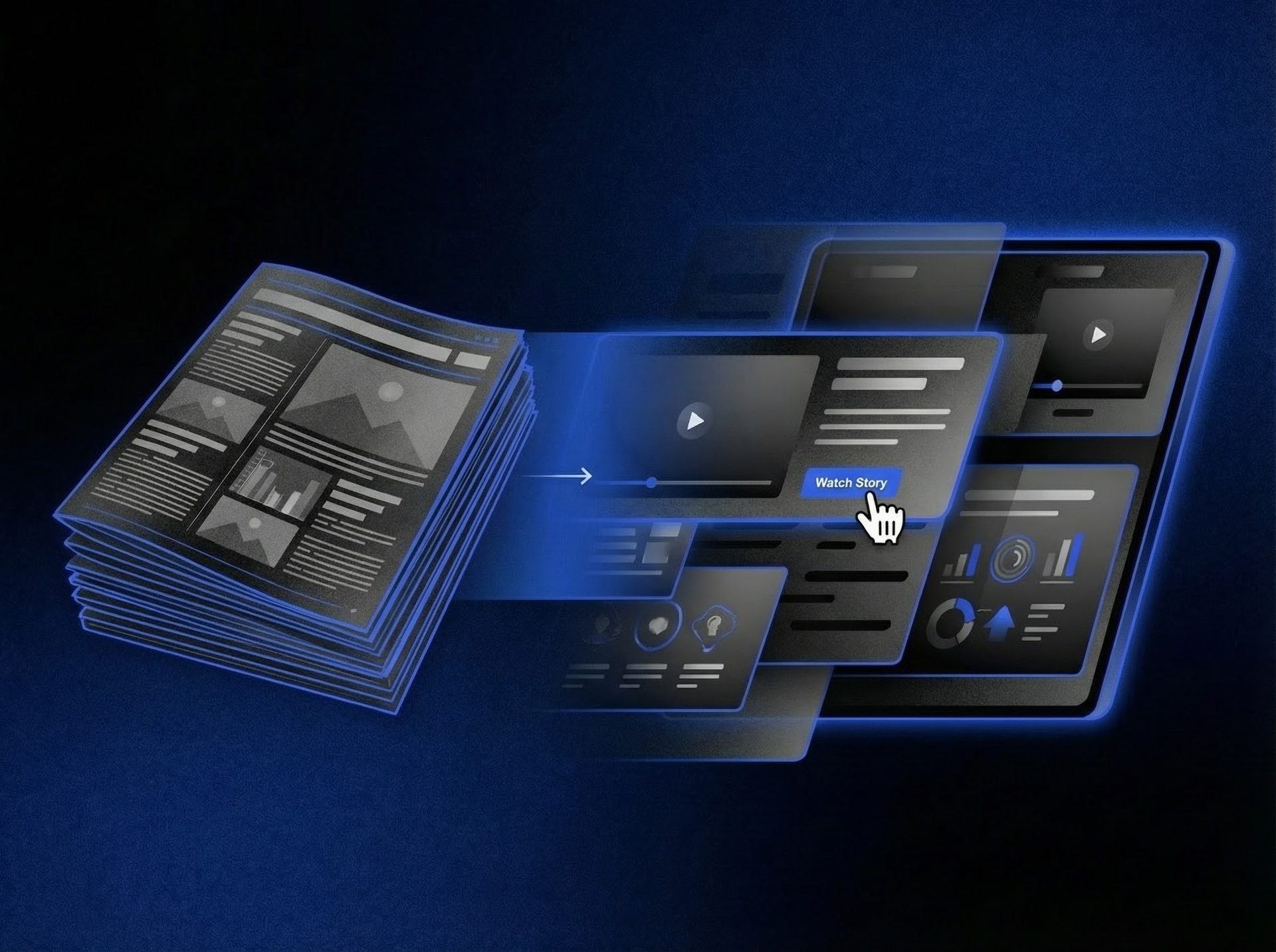
From static to cinematic. D2 used Vev to bring their print publication to the digital realm.
The false trade-off: governance vs agility
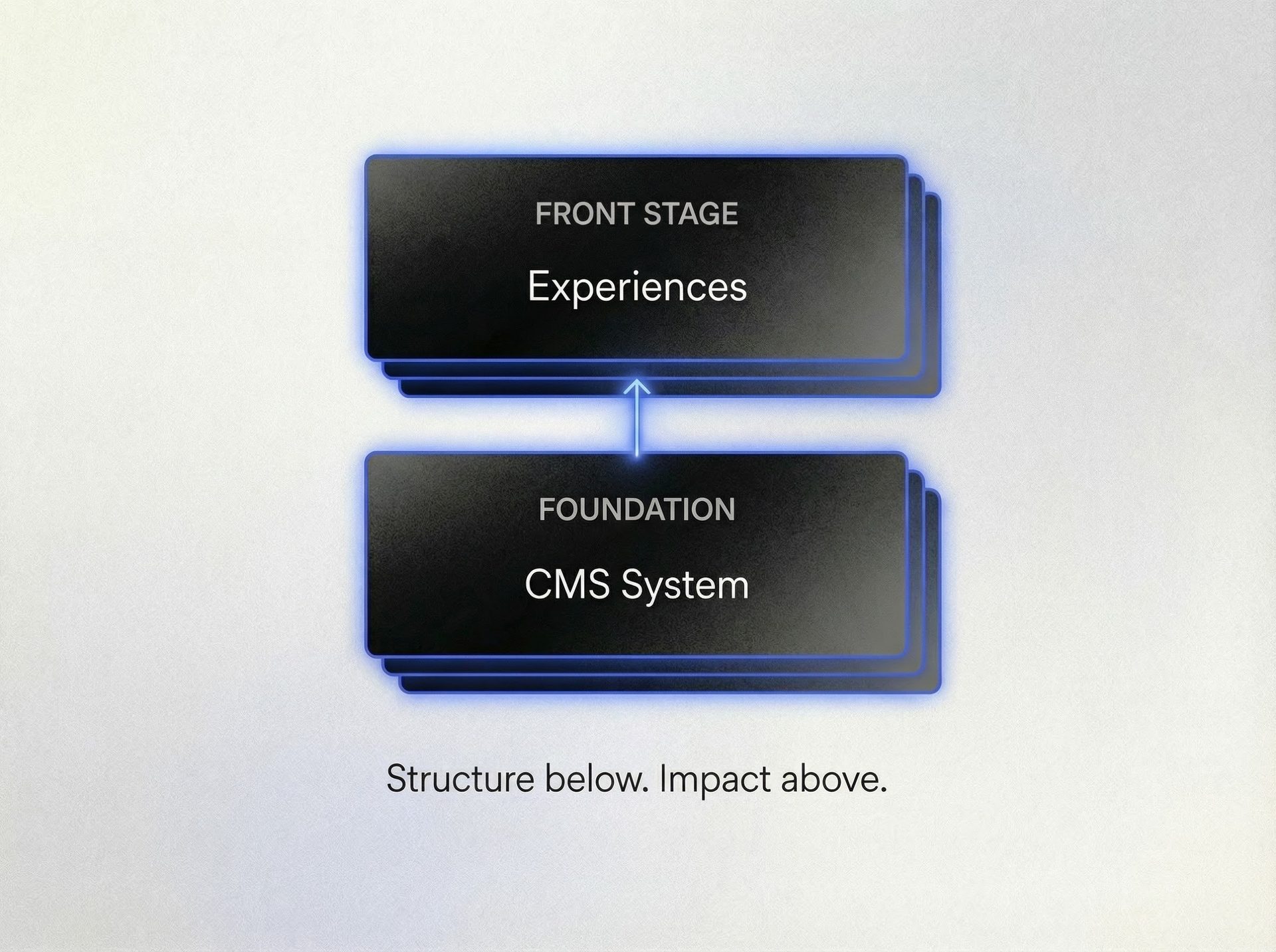
Enterprise teams often assume they must choose between control or creativity. That’s a false binary. The most mature digital organizations are adopting a two-layer architecture:
Layer 1: The foundation (CMS)
Your structured ecosystem:
- Blog
- Help center
- Knowledge base
- SEO-driven content
- Product documentation
Built for scale, governance, and operational efficiency.
Layer 2: The experience layer (visual engine)
Your high-impact surface:
- Campaign pages
- Product storytelling
- Interactive reports
- Conversion-focused landing pages
- Experimental formats
Built for speed, flexibility, and differentiation.
Why the two-layer model works
1. Velocity increases
When marketing teams aren’t fighting template limitations, production cycles compress dramatically. High-impact pages that traditionally required weeks of backend coordination can be launched in days (and sometimes hours if you're using the right tools!). The organization moves at the speed of its ideas, not the speed of the CMS and dev teams.
2. Developers focus on architecture, not layout adjustments
Engineering time shifts from:
“Can we move this button 12px?”
To:
“How do we improve infrastructure, performance, and scalability?”
That’s a better allocation of technical capital, and gives autonomy to the designers to focus on those design tweaks.
3. Creative quality improves
When teams have access to a structured visual system, they experiment more than if they are stuck with templates. This means iteration increases and performance compounds, whilst governance remains intact.
Important: this isn’t a CMS replacement strategy
Adopting a two-layer model is all about orchestration. Your CMS remains your foundation, which is important. A visual experience platform like Vev becomes your acceleration layer. Together, they form a production ecosystem built for modern marketing velocity.
Designing a high-velocity workflow
Implementing this model successfully requires more than tooling. For enterprises, you will need:
- Clear separation of roles
- Defined publishing governance
- A structured design component library
- A scalable production workflow
This is where many teams stall; not because of technology, but because of implementation clarity.
This is the gap v³design increasingly works in. We’re not just building beautiful experiences, we’re also implementing the second layer properly.
For example, we don’t just design pages. We:
- Build structured libraries for multiple teams
- Define scalable workflows
- Support onboarding at scale (sometimes 100+ users)
- Align designers, marketers, and sales around a shared system
The aim? A production model that scales.
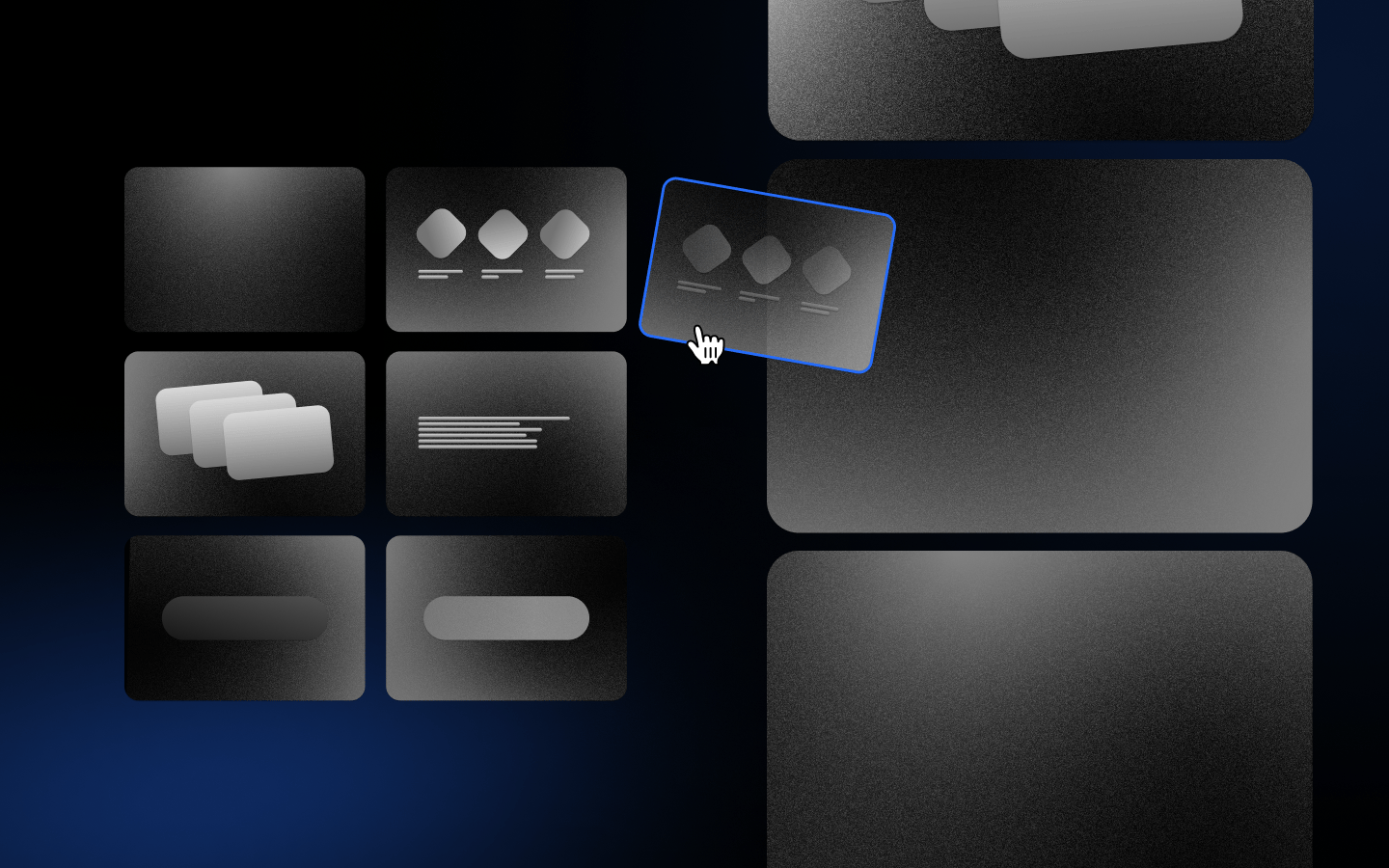
Avoid brand drift and produce content at scale? Yes please! Vev's Libraries feature make it easy to reuse pages, sections, and components across your projects. Setting up and building out your Libraries is just one of the services offered by v³design to make sure you are set up to use Vev for success.
Is your CMS your foundation, or is it your bottleneck?
The organizations winning right now aren’t consolidating everything into one rigid system. They’re designing ecosystems that allow structure and creativity to coexist.
If you’re exploring how to build a high-velocity production workflow that actually scales, get in touch with the v³design team.